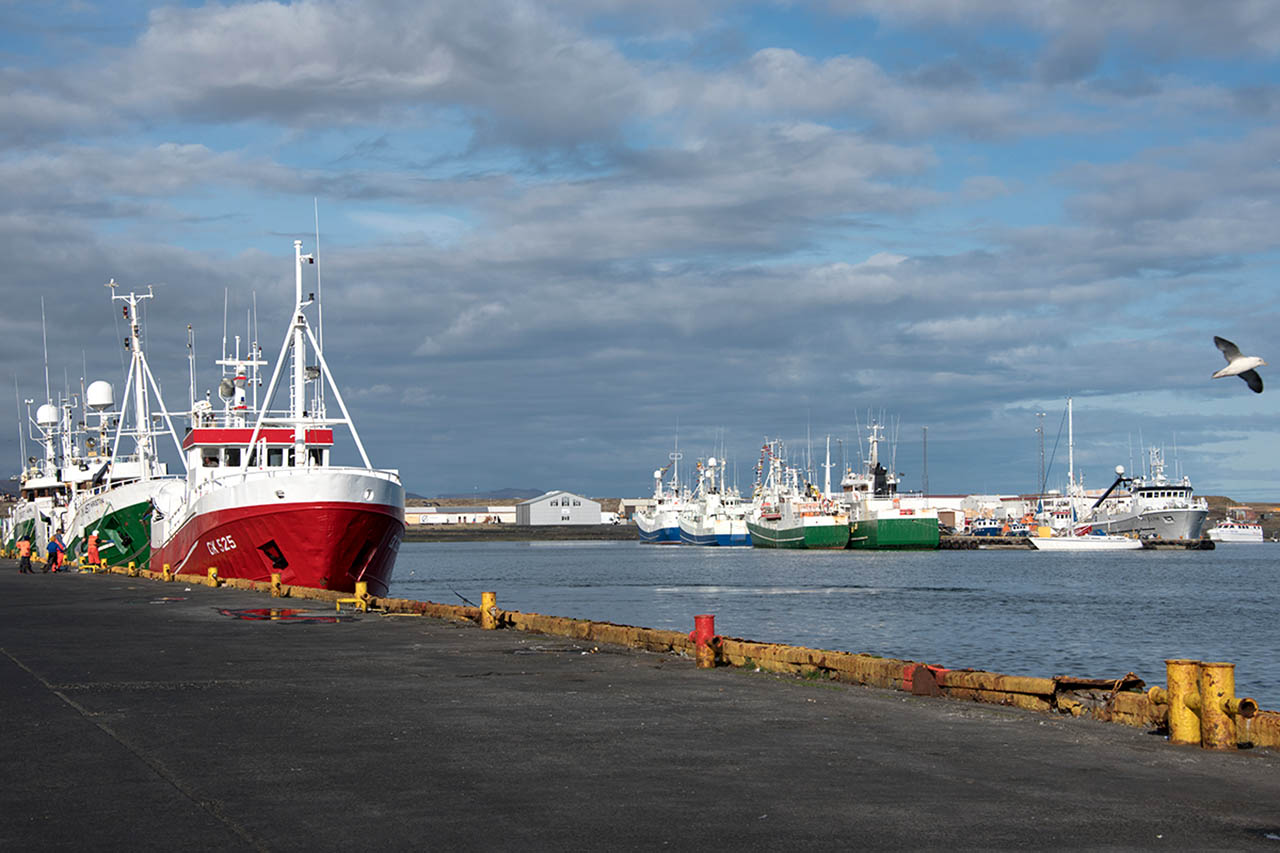
Tucked against the blackened cliffs of Iceland’s southwest coast, Grindavík has long stood as a quiet emblem of resilience — a village where fishing lines, family stories, and fault lines all run deep. Founded by Viking settlers in the 10th century, this coastal community grew not only from the sea but with it, transforming from a salt-weathered outpost into one of Iceland’s most vital fishing ports. Here, every harbor buoy and weatherworn boat tells of a life lived between waves and winds — and lately, between lava and ash.
From Sea-Bound Beginnings to Economic Anchor
Throughout the 20th century, Grindavík modernized alongside Iceland’s rising fortunes. Its harbor, once a refuge for simple rowboats, expanded to host sleek trawlers and deep-sea vessels. The town’s economy thrived, anchored in its rich fishing grounds and supported by processing plants, maritime industries, and — in time — a surge in visitors. Why did tourists come? Not just for the seafood (though you’d be hard-pressed to find fresher fish) but for the surreal serenity of the nearby Blue Lagoon — a luminous geothermal spa nestled in a lava field, where silica-rich waters cradle the weary. Just a ten-minute drive from town, it became a must-visit symbol of Iceland’s geothermal magic — and Grindavík, its welcoming neighbor.
The Town on a Tectonic Tightrope
What many visitors don’t realize is that Grindavík rests atop the very bones of the Earth’s restless crust. Situated on the Mid-Atlantic Ridge, where the North American and Eurasian plates drift apart, this quiet village has always had magma flowing beneath its feet. For centuries, that power slumbered. Steam vents whispered quietly in the moss-covered hills. Lava fields from eruptions long past stood as playgrounds for myth and memory. Geothermal heat powered homes and nurtured sustainability. To many, Grindavík felt like a place where humanity and nature had struck a rare truce.
Fagradalsfjall’s Awakening: 2021’s Volcanic Revival
But nature, as Icelanders know well, never truly sleeps. In March 2021, after weeks of tremors, the earth split open at Fagradalsfjall — a long-dormant volcano just east of Grindavík. Rivers of glowing lava poured from the earth like molten memory, mesmerizing locals and visitors alike. It was the first eruption in the Reykjanes Peninsula in over 800 years, and for a time, it felt more like a spectacle than a threat. Guided hikes and live streams followed. Lava tourism was reborn. Yet even as crowds gathered in awe, the ground beneath them continued to rumble.
2023–2025: A Town on the Edge
By late 2023, seismic activity surged again — and this time, Grindavík bore the brunt. Earthquakes cracked roads and foundations. Fissures opened in the heart of the town. Then came the order few ever expected: evacuation. Over 4,000 residents left their homes, many for good. Streets emptied. Schools fell silent. The Icelandic government intervened with emergency housing, financial relief, and long-term buyouts of damaged properties — a humane yet heartbreaking chapter in the town’s millennium-old story. The town that had once stood proudly against ocean tempests now faced a quieter, slower unraveling — not from without, but from deep within.
Stillness and Spirit in an Absent Town
Today, Grindavík sits in eerie calm — not abandoned in heart, but in presence. Blackened lava cuts across once-busy roads. Steam rises from new vents in the earth. Yet amid this post-volcanic hush, Grindavík still calls. Travelers continue to visit the region — to see the Fagradalsfjall lava fields, to soak in the Blue Lagoon, to understand what it means to live beside fire. Each scorched path and displaced stone is now part of a living museum — a place where nature’s voice is loud, but memory speaks louder.
A Testament to Icelandic Fortitude
Grindavík is no longer just a fishing village or a waypoint en route to hot springs. It is a symbol: of adaptation, of fragility, and of human endurance. It reminds us that Iceland is not built despite its geology — but because of it. To walk here is to feel the tremors of history and the heartbeat of a people who have always known how to start again. So if you visit — and you should — come not just for the views. Come to witness a story still unfolding, where every lava stone holds both memory and meaning.